Is the PLC on your quote a purchase or a subscription?
Get the licensing model onto the purchase order before the controller is specified: perpetual, subscription, or a perpetual runtime with subscription engineering software — and whether the licence moves with the machine if the panel or the plant is ever sold. A quotation that lists a controller as a part number, a price and a delivery week answers none of that, and the same logic is now sold both ways.
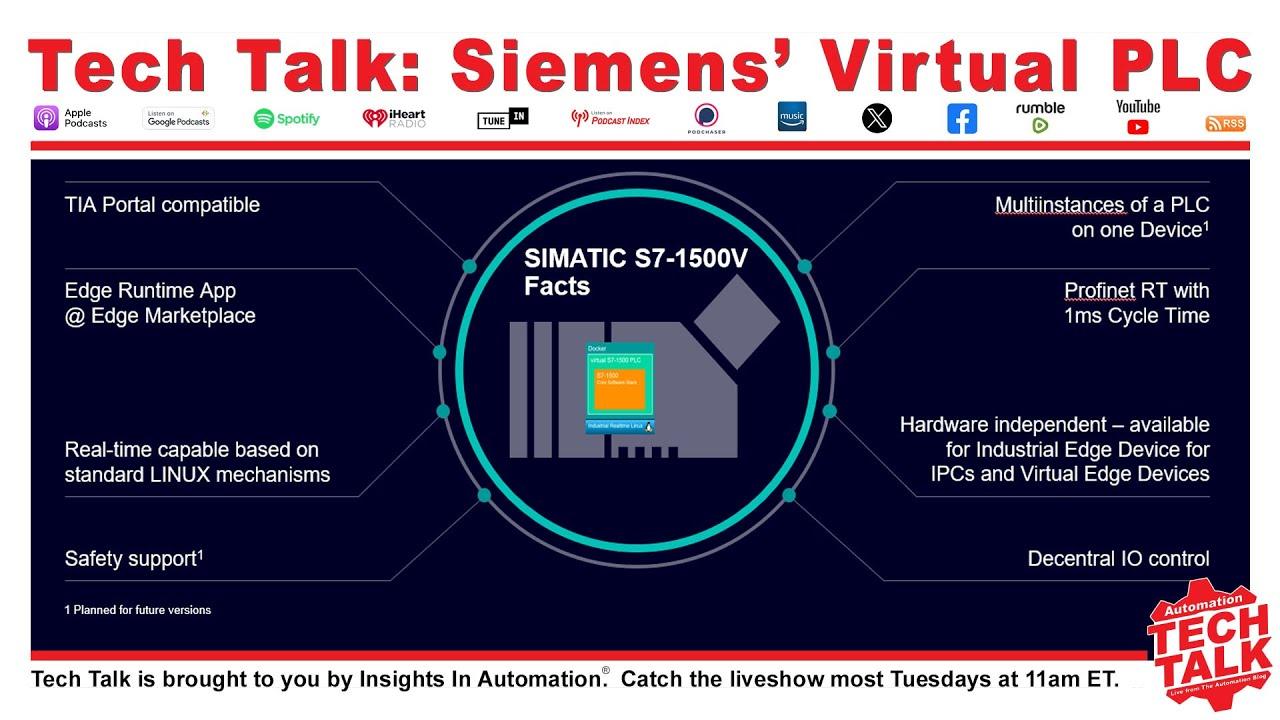
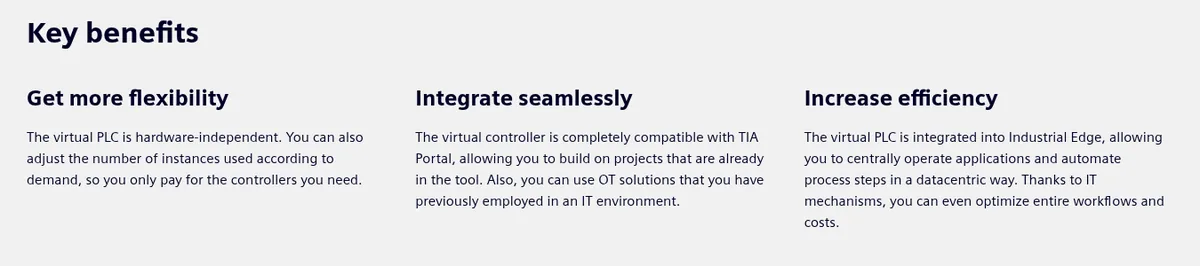
The SIMATIC S7-1500V is an S7-1500 delivered as an Industrial Edge app instead of a box on a DIN rail. Siemens' own product page calls the virtual PLC “your ticket to Software-defined automation”, says it is completely compatible with TIA Portal, and says you can adjust the number of instances used according to demand “so you only pay for the controllers you need”. Metering is the point of it, and a controller that can be counted can be billed by the count.
Four questions that belong on the order
- Which parts are licensed, how, and for how long: the runtime, the engineering software, or both. Perpetual on the runtime with an annual engineering seat is a different ten-year cost from perpetual on both, and only one of them appears in the first-year price.
- Does the licence transfer with the machine? A panel commissioned this year will still be running in 2036, and machines change hands with their control gear.
- What does year three cost, written into the quotation rather than described in a meeting. A renewal figure a supplier will not put on paper is a figure that has not been fixed.
- If the logic is portable, may you run it on hardware you choose? That portability is the real engineering benefit — logic on standard hardware can be moved, duplicated and backed up like any other software, which anyone who has spent a weekend swapping a failed CPU will value. If the answer is that it runs only on the vendor's own edge platform, what is being bought is a subscription with a flexibility story attached.
Why to ask this quarter rather than next
On 1 October Siemens merges Customer Services, Factory Automation, Motion Control and Process Automation into a single unit called Automation, under Rainer Brehm, whose previous brief as Digital Industries COO for automation and CTO was software-defined automation and industrial AI. Two things follow for anyone with paper in flight. An open quotation carries the discount authority of the unit that issued it, and three of those four units stop existing next week, so a deal that is priced and close is worth closing while you know what you are getting. And a support agreement that renews in the fourth quarter renews under a management line that did not exist when it was signed — pull those renewals now and re-read what they actually cover.
The direction shows up in the accounts rather than in any announcement about prices. In the quarter to 30 June, Digital Industries' software business grew 15 per cent to €1.8 billion, annual recurring revenue reached €5.7 billion, and the division's profit margin went from 14.5 to 18.7 per cent, with software the largest contributor to the improvement. That is the business the automation hardware now reports into. None of it obliges a supplier to re-price your controller. It does mean the licensing line has stopped being a footnote you can settle later.
Vesprr Software builds the MES, ERP and production reporting layer that sits above the controller. If a line is being specified this quarter, send the quotation across before the purchase order goes out and we will read the licensing terms with you.
Sources
- Siemens, SIMATIC S7-1500V virtual PLC product page: the quoted lines, TIA Portal compatibility and Industrial Edge deployment, read 24 September 2026.
- Siemens AG, 12 August 2026: Rainer Brehm Named President of Siemens' Automation Business — the four units, the 1 October date and Brehm's previous role.
- Siemens AG, 6 August 2026: Record third quarter – Outlook raised — Digital Industries software revenue, annual recurring revenue and margin for the quarter to 30 June.
- Drives & Controls, Siemens merges four automation businesses and appoints Brehm as president.