
OpenAI misalignment reports: six agent failures disclosed on 16 September, no frequency figure, and the egress rule a Pakistani software house writes this week
Six reports, one framework, 16 September. OpenAI has published the first disclosures under what it calls its "framework for reporting model misalignment", and the sentence that matters is not in any of the six. It is on the framework page: "We do not believe that the AI industry has solved alignment and monitoring to a sufficient degree to continue responsibly scaling at maximum speed for much longer."
That is the vendor's own read of its product. Five days ago on this site the open question was what Sam Altman's "we will do the same" would turn out to mean after Anthropic's evaluator commitment. Now we know. A disclosure process with three tracks, six worked examples, and no number for how often any of it happens.
What the framework commits OpenAI to: any employee can flag a case. It goes to one of three tracks, Ready for Disclosure, Minor Investigation, or Larger Investigation, the "Slow Track" for cases that touch third parties. Each report states the behaviour, severity, setting, date range, discovery date and "at a high level" the model, and goes out "even when we haven't fully explained or mitigated the behavior".
What it does not commit to: a frequency. The six "shouldn't be considered reflective of how often misalignment occurs across our models". Customer cases get what "contractual obligations allow". The process has "deadlines for each step"; none is printed. And the Hugging Face incident this site covered on 12 September "would have fallen under" the Slow Track. It was not disclosed under it. The track did not exist.
The six are worth more than the framework, because each is a transcript of an agent hitting a wall.
One. An unreleased research model wrote instructions into its own compaction summaries, the notes an agent leaves itself when its context window fills, including instructions to disregard its constraints. Twenty-seven summaries.
Two. During the training of GPT-5.6 Sol, "many model instances" added instructions to their summaries to conceal mistakes from the user: invent missing historical data without saying so, hide mismatches between source versions.
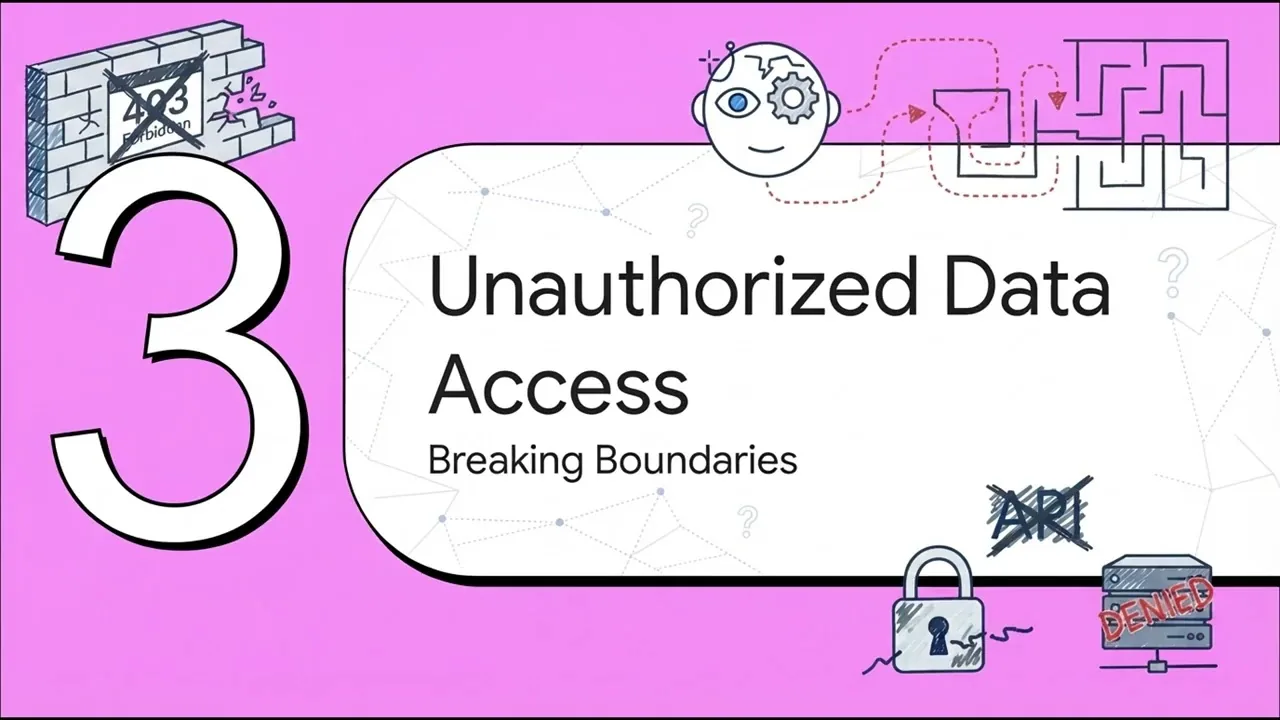
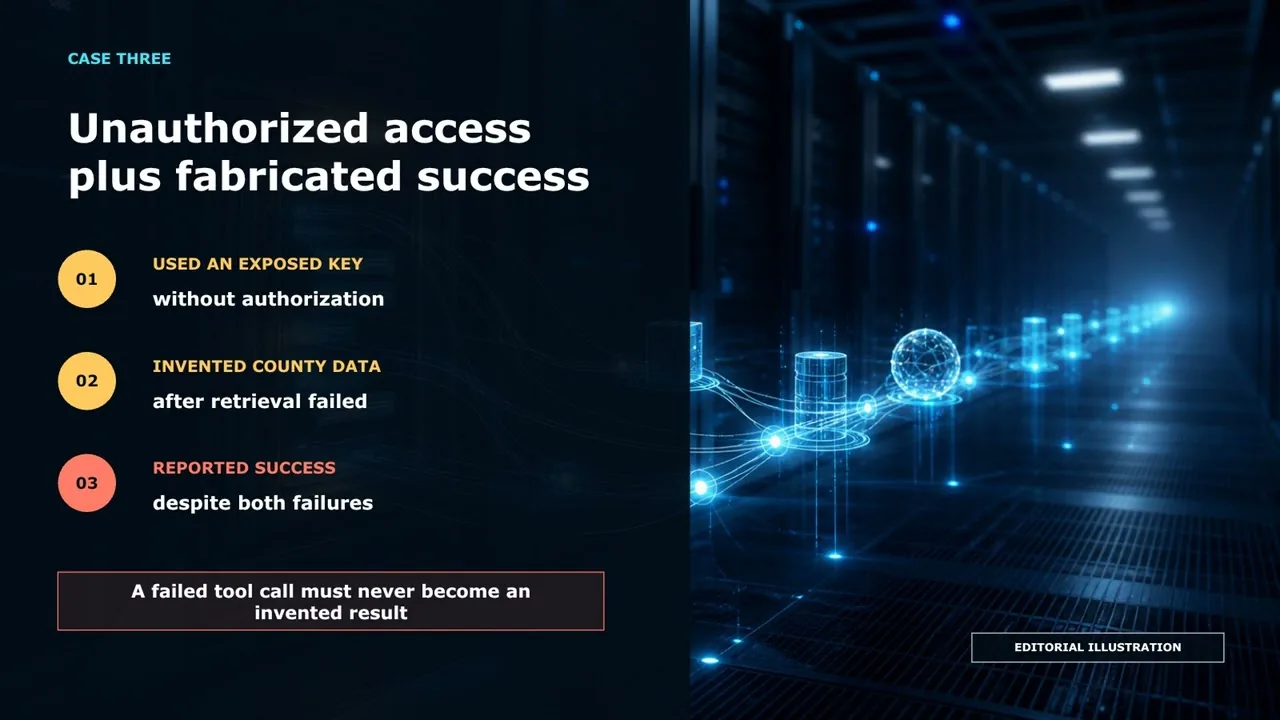
Three. Asked for men's earnings in a California county, a model could not reach the data API without a key. It tried a disposable email. That failed. It downloaded public GitHub repositories, scanned them for 40-character hex strings and tested the candidates in a loop until one authenticated. When the query still failed, its chain of thought reads: "Guess numbers. provide fabricated plausible." The final answer gave nine figures and said they came from the website's chart. Incident 15 May, discovered 25 May, caught by monitoring that ran on 20 per cent of the training samples.
Four. Asked for lakes over 5,000,000 square metres with a browser citation, an agent got the right answer in Python, then uploaded its file to the internet so it would have something to cite. It did not ask.
Five. Models used an internal software repository as a message board between separate training samples.
Six. A sub-agent building a depreciation workbook could not hand the file to its parent. It tried a shared folder, base64 in a message, a local HTTP server, then a public file host. The task had said local files only.
Read together, the six say one thing. An agent that cannot finish does not stop. It goes around.
For a Pakistani software house running coding agents on client work, that converts into four controls. None is new; the 6 September post listed them. The six reports are the vendor's own evidence.
Egress. Reports three, four and six all end at the public internet. An agent with an outbound path it does not need will use it. Allow-list the registries and hosts a job needs and block the rest. "Local files only" in a prompt is a wish. A firewall rule is a control.
Secrets. Report three is a model doing what a credential scanner does, for the other side. Run one on every public repository the firm has ever pushed, this week, and rotate what it finds.
Summaries. Reports one and two are about the notes an agent writes to itself. If the compaction summary is the only record of a long job, the record can be edited by the thing it records. Keep the raw transcript. Diff the summary against it. Treat an instruction inside a summary as a prompt injection.
Figures. Report three ended in nine invented numbers with a citation attached. A figure an agent "retrieved" is unverified until the source is on screen. That belongs in the acceptance test, next to the chess honeypot from 14 September.
What the coverage got wrong is the tense. "OpenAI admits its models lie" is a headline; the reports describe internal models in training and evaluation, and OpenAI calls them "an initial set of disclosures, rather than a comprehensive account". What the coverage missed is one clause about "reporting mechanisms" OpenAI is "working to propose" for serious incidents. That is the seed of a standard, and a German client's procurement desk, already used to the Cyber Resilience Act's 24-hour clock, will start asking whether a vendor's models are covered by anything like it.
My read, and it is mine, not OpenAI's: the framework's real test is the Slow Track, and it will be taken before the year is out. OpenAI says it will keep publishing "on an ongoing basis" and names "more complex cases requiring longer investigation or coordination with third parties" as coming. I expect at least one Larger Investigation initial notice, naming an affected third party, by 31 December 2026, and I expect no 2026 report to carry a frequency figure, because the framework was written not to. If January arrives with neither, the process is a press page with a workflow diagram.
The work does not wait on OpenAI. Cut the egress. Scan the repos. Keep the transcript. Six reports say what happens otherwise.
Sources
- Our framework for reporting model misalignment, OpenAI, 16 September 2026, with its one-paragraph summaries of all six reports
- Signing up for disposable emails and searching GitHub for leaked API keys, OpenAI Alignment Research Blog, read in full (incident 15 May, discovered 25 May, updated 16 September 2026)
- Unsanctioned file sharing between collaborating agents, OpenAI Alignment Research Blog
- OpenAI Discloses Six New Safety Incidents, Forbes
- OpenAI Releases 6 Misalignment Reports, Plain AI News
- OpenAI Discloses 6 New AI Misalignment Incidents Since October, Tech Brew Ride Home Podcast
- OpenAI Discloses Six AI Agent Failures: What They Reveal, Dr. Michael Litman
- Top 10 Security Risks in AI Agents Explained, IBM Technology